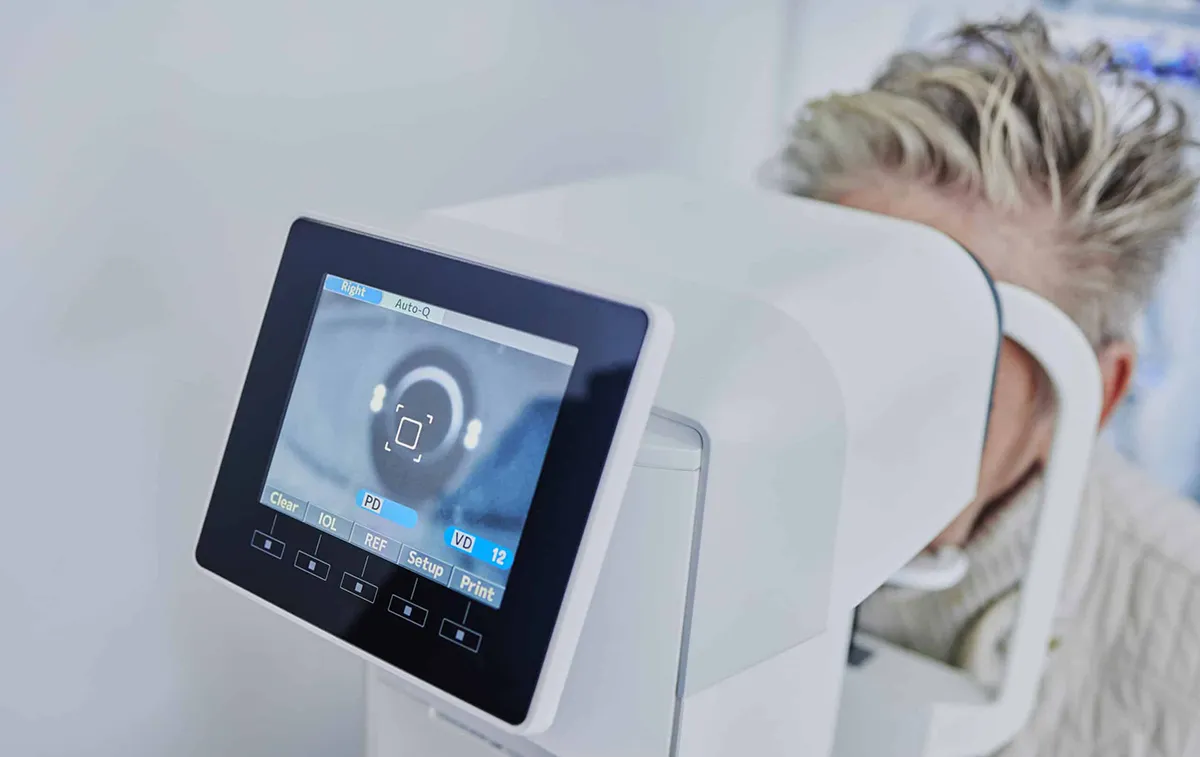
Artificial intelligence (AI) and deep learning in ophthalmology are creating additional tools to support screening for glaucoma and diabetic retinopathy — conditions that can cause irreversible visual damage when detected late.
Supporting diabetic-retinopathy screening
AI systems can analyse retinal photographs for signs such as microaneurysms, haemorrhages, hard exudates and retinal neovascularisation. Risk classification can help clinicians at primary-care level decide whether to monitor a patient or refer them to vitreoretinal care.
Analysing glaucoma risk
For glaucoma, AI can assist with analysis of the cup-to-disc ratio and retinal nerve-fibre layer in fundus images or OCT data. These tools do not replace eye examination, intraocular-pressure measurement, visual-field assessment or the clinical judgement of an ophthalmologist.
Value for communities
When deployed with appropriate safeguards, AI can increase screening capacity where specialist access is limited, shorten triage time and support chronic-disease management. Its use requires quality assurance, data protection and clear referral pathways.
This English translation is provided for reference. If you notice an error or an inaccuracy, please contact the Vietnam Ophthalmology Society.